
The Ultimate Guide to Tips Tech PBLinuxGaming: Is Linux Ready to Replace Windows for PC Gamers?
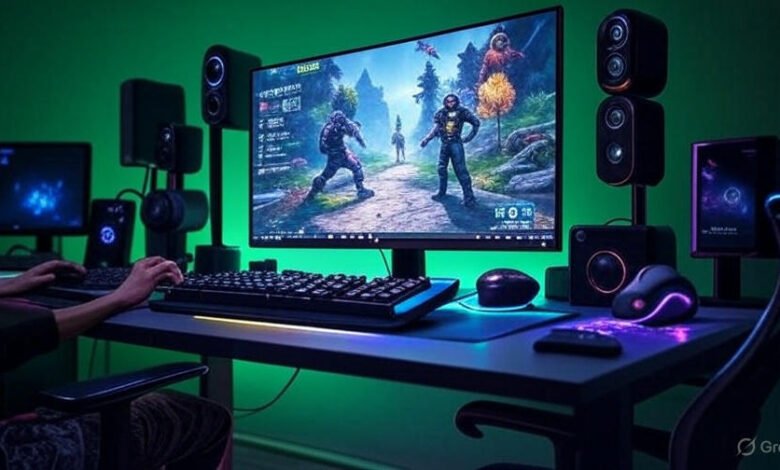
The world of PC gaming has always been almost completely controlled by Windows, but things are rapidly changing, and a huge reason for this shift is the massive community interest stirred up by channels like Linus Tech Tips (LTT) and the rise of the Steam Deck. When we talk about Tips Tech pbLinuxGaming, we are essentially referring to the modern, and surprisingly powerful, experience of playing all your favorite PC games on the open-source Linux operating system. The “pb” part you might have heard is often just a simplified term or a typo that gets merged into discussions around PC-based Linux Gaming. The core idea here is challenging the old belief that Linux is too complicated or too limited for serious gamers.
The popularity of LTT’s past “Linux Gaming Challenge,” where they tried to use Linux as their only operating system, really opened a lot of people’s eyes to the progress that has been made. While their initial attempts showed some of the difficulties, the entire movement has since grown rapidly. The conversation is no longer about if you can game on Linux, but rather how well you can game on Linux, and in many cases, the performance and stability are now matching or even beating Windows in certain games.
This is primarily because of a major push from Valve, the company behind Steam and the Steam Deck, to make their Steam Play feature work perfectly. The overall promise of Tips Tech pbLinuxGaming is appealing: you get an operating system that is more open, highly customizable, and often requires fewer system resources than Windows, which can lead to better performance. However, there are still some initial hurdles, especially when it comes to non-Steam games or certain online titles with special anti-cheat software, which we will explore in depth. The fact remains that for a PC gamer looking for more control and potentially better performance, the Linux world is no longer a scary place—it’s a fascinating new frontier.
Understanding the Ecosystem: The Core pbLinuxGaming Tools (H2)
The single biggest reason why Tips Tech pbLinuxGaming is now a realistic choice for PC gamers is the development of powerful compatibility tools. You don’t have to wait for a game developer to create a special Linux version of their game anymore. Instead, we rely on a smart piece of software called Proton, which acts as a translator between your Windows-only game and the Linux operating system. This is crucial because it allows the massive library of existing Windows games to run almost flawlessly on Linux. Proton is not a simple emulator; it is a modified version of the open-source Wine compatibility layer, created by Valve specifically for Steam. It efficiently translates the DirectX commands (which Windows games use) into Vulkan commands (which Linux understands), often resulting in performance that is comparable to, and sometimes even faster than, running the game natively on Windows.
Steam and Proton: The Engine of Modern Linux Gaming
Proton makes the process incredibly easy: once you open Steam on Linux, you simply go into the settings, enable “Steam Play” for all titles, and Steam automatically downloads and uses the correct Proton version to launch any Windows game you own. This simple, one-click process has removed the complex tinkering that used to scare away potential Linux users. To check how well a specific game runs, the community uses a website called ProtonDB. This site gathers reports from thousands of Linux gamers and rates each game’s compatibility. You will find ratings like Platinum (runs perfectly out of the box), Gold (runs perfectly with minor tweaks), and Borked (doesn’t work yet). Checking ProtonDB is the first and best piece of Tips Tech pbLinuxGaming advice you can get before buying or installing any game. Additionally, many advanced users use Proton GE (GloriousEggroll), a community-maintained version of Proton that often includes cutting-edge fixes for newly released games before they make it into the official Valve version.
| ProtonDB Rating | Meaning for the Gamer | Estimated Compatibility |
| Platinum | Runs perfectly out of the box. | ~50% of titles |
| Gold | Runs great after a simple setting change. | ~30% of titles |
| Silver | Runs, but may have minor graphical bugs. | ~10% of titles |
The Windows Game Library (Beyond Steam)
While Steam and Proton handle the bulk of your library, most gamers have titles on other launchers like Epic Games, GOG, or Ubisoft Connect. This is where other specialized tools come into play. Lutris and Heroic Games Launcher are two popular applications that simplify the installation and management of games from these non-Steam stores. They act as a central hub, using similar compatibility technology to Proton (often just Wine or Proton itself) to get your other games running.
Another powerful and user-friendly tool is Bottles. This application focuses on creating “environments” for different Windows applications. Think of a bottle as a separate, clean mini-Windows installation for each game or program. This is helpful because if one game needs an older piece of software to run, it won’t break the environment of a newer game. By using these tools, the dream of a complete pbLinuxGaming setup that includes all your favorite storefronts becomes a reality. This layer of tools ensures that nearly 90% of Windows games are now at least functional on Linux, proving that the platform is ready for prime time.
Setting Up Your Rig: Distros and Drivers for Optimal Performance
Making the switch to Tips Tech pbLinuxGaming requires choosing the right Linux distribution, or “distro,” and correctly installing your graphics drivers. This is the part that used to be complicated, but modern gaming-focused distros have made the initial setup almost as easy as installing Windows.
Choosing Your First Linux Gaming Distribution (Distro)
For a gamer moving away from Windows, a clean, stable, and ready-to-go operating system is essential. You want something that handles drivers automatically and has gaming tools pre-installed.
- Beginner-Friendly Choices: Distros like Pop!_OS and Linux Mint are highly recommended. Pop!_OS, in particular, is excellent because the company that makes it, System76, provides a special installation image specifically for NVIDIA users that includes the notoriously tricky proprietary drivers right out of the box. This saves new users a lot of headaches.
- Gaming-Optimized Distros: For the absolute best, most modern pbLinuxGaming experience, power users are increasingly choosing distros like Nobara or Bazzite. These are built specifically for gaming and usually include the latest kernel (the core of the operating system), the newest graphics drivers, and performance-enhancing tools like GameMode already configured. They aim to be the “just works” solution for serious gamers.
The Critical Step: Graphics Drivers and Hardware
Your Graphics Processing Unit (GPU) is the heart of your gaming PC, and the drivers are the blood vessels. Proper installation is critical for performance in Linux Gaming.
- AMD Users: If you have an AMD Radeon graphics card, you are in luck. AMD’s drivers on Linux are open-source and are usually included directly in the Linux kernel and the Mesa driver package. This means they are often smooth, fast, and stable without any extra effort on your part. AMD often represents the path of least resistance for Tips Tech pbLinuxGaming.
- NVIDIA Users: NVIDIA users must use the proprietary drivers (closed-source drivers provided by NVIDIA). While these are getting much better, they can still require a little more care during installation. If you choose a beginner-friendly distro like Pop!_OS or Nobara, they usually handle the NVIDIA driver installation for you, making the process painless. Running the latest version of these proprietary drivers is a must to take advantage of the newest performance and stability fixes.
For both brands, making sure your drivers are updated through your distro’s software manager is the most important step for getting maximum FPS.
Performance Tuning and Optimization Tips Tech
One of the great advantages of pbLinuxGaming is the ability to fine-tune your system for maximum performance. Unlike Windows, where many background processes are hidden and mandatory, Linux gives you the control to cut out the unnecessary clutter. This optimization is often necessary to compete with native Windows performance, and the tools to do it are surprisingly easy to use.
Maximizing Frame Rates with GameMode and FSR
Two key tools dominate the discussion of Linux performance optimization:
- GameMode: This is a small helper program created by Feral Interactive. When you start a game, GameMode automatically tells the Linux system to prioritize the game’s processes. It temporarily sets the CPU to run at its highest clock speed (performance governor), adjusts input/output priority for faster loading, and turns off things like screen savers. Enabling it is often as simple as adding the prefix
gamemoderun %command%to the game’s launch options in Steam. It’s a quick, free performance boost. - FidelityFX Super Resolution (FSR): This technology, developed by AMD, is now built directly into the core of pbLinuxGaming via the Steam Deck and Proton. FSR allows your system to render the game at a lower resolution (e.g., 720p) and then use a smart upscaling algorithm to make it look much sharper on your high-resolution monitor (e.g., 1080p or 4K). This provides a massive framerate increase with only a minimal loss in visual quality. Because FSR is implemented at the system level in Proton, you can use it on any game, even if the game developer didn’t officially support it.
Troubleshooting Performance: Stuttering and Shader Caching
New Linux gamers often experience brief pauses or “stuttering” when playing a game for the very first time. This is a normal part of the process, and the fix is simple.
- The Shader Compilation Stutter: Windows uses a different method for rendering game graphics than Linux does. On Linux, the system has to translate the game’s graphics code into a format your specific GPU understands, a process called shader compilation. This usually happens the first time a new effect appears on screen, causing a temporary stutter.
- The Simple Fix: Valve knows this is an issue, so Steam now uses Shader Pre-Caching. When you install a game, Steam downloads a ready-made shader cache from other users. You just need to let Steam finish this download before you launch the game. After the initial first-time run, the stuttering almost completely disappears because the cache has been built up. For a seamless Tips Tech pbLinuxGaming experience, patience during the initial download is key. The general rule of thumb is: play a game for about 15 minutes, and the stuttering will dramatically decrease as the cache is built.
The Current State of Anti-Cheat: The Biggest Hurdle for pbLinuxGaming
If there is one area that still holds back Tips Tech pbLinuxGaming from being a 100% replacement for Windows, it is competitive multiplayer games that use advanced anti-cheat software. Anti-cheat systems are designed to stop hackers, but some of the most aggressive ones, which run deep inside the operating system kernel, are often incompatible with Linux.
EAC and BattlEye: What Works and What Doesn’t
- Easy Anti-Cheat (EAC) and BattlEye are the two most common anti-cheat systems. The good news is that both companies have created solutions that allow games to work with Proton and Linux. The catch is that the game developer or publisher must actively click a button to enable that Linux support for their specific game.
- The Reality in 2025: Many of the biggest competitive games have now enabled support, especially following the popularity of the Steam Deck. Games like Apex Legends or Destiny 2 (though Destiny 2 is still blocked) have seen compatibility attempts. However, other huge titles like Valorant (which uses Riot’s proprietary Vanguard anti-cheat) still completely block Linux users. This is a developer decision, not a technical limitation of the Linux OS or Proton. For competitive players, checking the anti-cheat status on ProtonDB is more important than checking the general game compatibility. The community is constantly campaigning for the remaining publishers to enable support.
Daily Driver Experience: Life Beyond Just Games
Switching to pbLinuxGaming means switching your entire operating system, and a successful transition depends on how well Linux handles the rest of your digital life—not just games. The Linux environment, especially modern desktop environments, is actually built to be an excellent general-purpose computer.
Productivity, Media, and Peripherals
Linux has excellent, free, and open-source alternatives for almost every major program you use on Windows:
| Windows Program | Linux Alternative(s) | Notes for Tips Tech Users |
| Microsoft Office | LibreOffice, Google Docs (Web) | LibreOffice is a full, powerful, free office suite. |
| Adobe Photoshop | GIMP, Krita | Krita is especially popular among professional digital artists. |
| Adobe Premiere | Kdenlive, DaVinci Resolve | DaVinci Resolve has a native, professional Linux version. |
| Peripherals | All major keyboards, mice, and headsets work instantly, often better. | You might need to use a special community tool to set up advanced RGB lighting. |
Crucially, modern Linux distros have near-perfect support for gaming peripherals, including Xbox and PlayStation controllers, which are typically recognized instantly and work perfectly within Steam.
The Control and Customization Advantage
The biggest difference between Windows and Linux is control. Linux is open source, meaning you can change almost every part of it, from the visual theme to how the kernel handles CPU scheduling. This is why Tips Tech pbLinuxGaming enthusiasts often prefer it:
- Less Background Clutter: You decide what runs in the background. No forced updates, no unwanted telemetry (data collection), and therefore, more CPU/GPU resources are always available for your games.
- Custom Performance: You can set up scripts and tools to ensure your CPU is always in “performance mode” only when a game is running, getting the most out of your hardware without having to install clunky third-party tuning programs. This level of customization leads to a cleaner, faster, and more private daily computing experience.
Conclusion: Is Tips Tech pbLinuxGaming the Future for You?
The journey of Tips Tech pbLinuxGaming has been long, but thanks to the tireless efforts of Valve and the open-source community, Linux has truly arrived as a viable, often superior, operating system for gaming. The days of endless tinkering and broken setups are largely over.
The Final Verdict:
- Who Should Switch Now? If you primarily play single-player games, titles from Steam, or popular multiplayer games that have already enabled Proton Anti-Cheat support, the answer is a definite yes. You will gain stability, privacy, and full control over your machine. Using a gaming-optimized distro like Nobara or Pop!_OS makes the switch nearly effortless.
- Who Should Wait? If your entire gaming life revolves around one or two competitive online games that are known to use kernel-level anti-cheat (like Valorant), you will need to wait until the developers choose to support the platform.
The compatibility percentage is steadily climbing toward 100%, and with the foundation of Proton, Lutris, and powerful community knowledge, Linux Gaming is no longer a fringe hobby—it is a powerful alternative poised to redefine the PC gaming landscape. The best time to start exploring this open, high-performance world is right now.