Fascisterne: Exploring the Term, Its History, and Modern-Day Implications
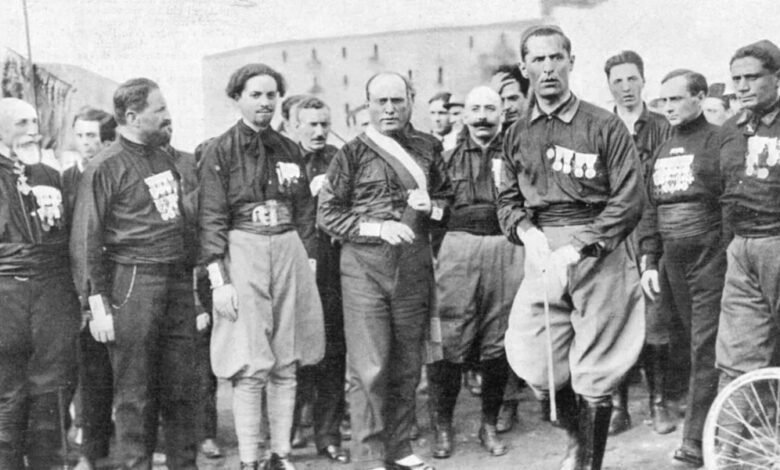
The term fascisterne is a Danish word that translates to “the fascists” in English. It’s often used to describe individuals, groups, or ideologies associated with far-right, authoritarian, and nationalist movements. In a broader context, the word “fascism” itself originated from early 20th-century European political movements, notably in Italy under Benito Mussolini, and later in Nazi Germany under Adolf Hitler.
In Denmark, fascisterne is frequently used in political discussions to refer to extremist groups or individuals who adhere to fascist principles or those who display tendencies of far-right authoritarianism. Though the term is directly tied to fascism, it is sometimes used more loosely to describe individuals or organizations that are perceived as excessively nationalistic or authoritarian, even if they don’t fully identify with classical fascist ideology. The significance of the term also varies depending on the political climate. For some, calling someone “fascisterne” is a sharp critique of their far-right views, whereas for others, it is used to label and discredit political adversaries. This has made the word a symbol of political division in Denmark and other European countries.
Historical Context of Fascism and Fascisterne
Fascism as an ideology emerged in the early 20th century, deeply rooted in the turmoil and unrest following World War I. It found a significant following in countries such as Italy, Germany, and Spain, where nationalist movements sought to restore order and stability after the war. The term “fascism” comes from the Italian word fascio, meaning a bundle or group, symbolizing strength through unity. The ideology emphasized strong, centralized control, authoritarian leadership, and a rejection of liberal democracy, socialism, and communism. In Italy, Benito Mussolini established the first fascist government in 1922, creating a model that inspired many other European countries. The core of fascism was its emphasis on nationalism, militarism, and the belief that the state should control the lives of its citizens for the greater good of the nation. Hitler’s Nazi Party in Germany followed suit, adopting similar principles but with a more intense focus on racial purity and anti-Semitism.
For Denmark, the rise of fascism was felt particularly in the 1930s, although the country did not fall under fascist rule. However, there were movements within Denmark, like the Danmarks Nationalsocialistiske Arbejderparti (the Danish National Socialist Workers’ Party), which supported fascist ideology. The term fascisterne began to be used to refer to these groups who embraced the authoritarian aspects of fascism, even if they didn’t fully align with the complete Nazi or Mussolini model. While Denmark managed to avoid a fascist takeover during WWII, the impact of these ideologies left a lasting impression on Danish politics. After the war, the term fascisterne was used to describe anyone advocating for ultra-nationalist, authoritarian, or totalitarian political views.
Fascisterne and Danish Politics
In modern Denmark, fascisterne is a term often used in political discourse to label far-right extremists, although the word carries different connotations depending on who uses it. While Denmark is largely considered a progressive, democratic country, there are political factions that have been associated with the far-right, some of which identify with elements of fascist ideology.
The most notable group in this regard is the Danish People’s Party (Dansk Folkeparti), which has been criticized for its nationalistic views, especially concerning immigration. Though they do not explicitly claim to be fascist, their stance on issues such as Denmark’s Muslim population and their opposition to the European Union reflect some elements that critics associate with fascist ideologies. The term fascisterne is sometimes used to describe this group, even though they do not fit the traditional definition of fascism.
In the Danish public sphere, fascisterne has been used to attack political opponents who embrace nationalism and reject immigration. It’s important to note that, unlike some European countries where far-right movements have gained more traction, Denmark has not seen a political party openly declare itself as fascist. However, the term is still wielded to critique the rise of nationalism and populism, especially when these movements challenge Denmark’s long-standing traditions of social welfare and inclusivity.
Fascist Ideology: Core Principles and Beliefs
To fully understand fascisterne, it’s necessary to delve into the core principles that define fascism as an ideology. At its heart, fascism is an authoritarian form of government that rejects democratic principles, advocating instead for a centralized state led by a dictatorial leader. Here are some key beliefs central to fascism:
- Ultra-Nationalism: Fascism is deeply rooted in the belief that the nation should come above all else. This can involve the promotion of ethnic purity and the idea that the nation is superior to others. National unity, often achieved through propaganda and a cult of personality, is a central theme.
- Authoritarian Leadership: Fascism calls for a strong, often militaristic leader who has the power to make decisions without democratic constraints. This leader is seen as a symbol of unity and strength, embodying the will of the nation.
- Anti-Democracy: Fascists reject democratic norms and institutions, seeing them as weak and inefficient. They often advocate for the suppression of political opposition and the erosion of individual freedoms to maintain state control.
- Militarism: Fascist regimes glorify the military and advocate for a strong, often aggressive, military presence. Military might is seen as a tool to expand national power and maintain order.
- Anti-Communism: A hallmark of fascism is its staunch opposition to socialism and communism. Fascists see these ideologies as threats to national unity and state control, often promoting them as dangerous to the nation’s stability.
While these principles formed the foundation of classic fascist regimes like those in Italy and Germany, modern iterations of fascism, or what people refer to as fascisterne, may adapt these ideas to contemporary issues such as globalization, immigration, and the perceived decline of national culture.
Fascisterne and Contemporary Far-Right Movements
In recent years, the term fascisterne has been increasingly used to refer to far-right movements that, while not identical to classical fascism, share certain aspects of the ideology. Across Europe and even in the U.S., there has been a surge in nationalism, anti-immigrant sentiment, and populism, which some critics argue are reminiscent of fascist thinking. In Denmark, groups like Stram Kurs (Hard Line) have been linked to far-right extremism, with their leader Rasmus Paludan gaining notoriety for his anti-Muslim views. While not officially aligned with historical fascist ideology, Paludan’s rhetoric, which focuses on national purity and a rejection of multiculturalism, is often described as having fascist overtones. The use of fascisterne in describing such groups is thus a way of emphasizing their authoritarian and exclusionary tactics, even if they don’t fit the classical definition of fascism.
Similarly, across Europe, far-right parties such as France’s National Rally (formerly the National Front), Hungary’s Fidesz Party, and Italy’s Lega are often labeled as fascisterne by their critics. These groups advocate for stricter immigration controls, a return to national sovereignty, and the rejection of internationalism, which are themes that echo fascist rhetoric. Though not all far-right movements are overtly fascist, they often employ populist and nationalist strategies that seek to exploit societal divisions. The term fascisterne in this context serves as a warning against the rise of extremism that undermines democratic values.
The Use of “Fascisterne” in the Media and Public Discourse
In Danish media and public discourse, the term fascisterne is frequently invoked as a way to criticize individuals or political groups with far-right ideologies. The media uses the term to spotlight the dangers of nationalism, xenophobia, and authoritarianism, which have become more pronounced in recent years.
However, the term can also be misused. It is sometimes used as a catch-all to discredit political adversaries, even when those labeled do not espouse truly fascist views. For example, mainstream political figures or parties may be called fascisterne by opponents simply for advocating for stricter immigration laws or expressing nationalism, even if these stances do not align with fascist principles. This usage has led to a polarization of the term, with some people seeing it as a legitimate critique of dangerous ideologies, while others view it as an overused label that undermines meaningful political debate. The overuse of terms like fascisterne can dilute its power and make it harder to distinguish between genuinely harmful extremism and more moderate political views.
Combatting Fascism: Legal and Social Efforts
Combating fascism, or the rise of fascisterne, involves both legal and social efforts. On a legal level, Denmark has laws in place to combat hate speech, discrimination, and the incitement of violence. These laws aim to restrict groups or individuals who promote fascist ideologies from organizing or gaining influence. For example, Stram Kurs, a Danish far-right party, has faced legal challenges for promoting hate speech against Muslims and immigrants.
Socially, Denmark has put efforts into educating the public about the dangers of extremism and promoting tolerance. NGOs, educational institutions, and grassroots organizations work together to foster inclusivity and provide counter-narratives to the ideologies promoted by far-right groups. Campaigns, workshops, and community dialogues aim to combat hate and build understanding across cultural and political divides. Efforts to combat fascism also extend to Europe, where countries like Germany, France, and Spain have developed robust systems for tracking hate groups and preventing their activities. These legal frameworks, alongside social activism, help to ensure that far-right ideologies do not gain a foothold in mainstream political discourse.
Why It’s Important to Understand Fascisterne Today
Understanding fascisterne is crucial in today’s political landscape. Far-right extremism, often with roots in fascist ideologies, has been gaining ground in many countries. By understanding the historical context and core beliefs of fascism, we can better identify and address its modern forms.
It’s essential to recognize the signs of fascism so that we can take steps to protect democratic values, human rights, and social harmony. Education, public awareness, and strong legal frameworks are vital tools in preventing the spread of fascism and its associated violence and hatred. By understanding fascisterne and the dangers posed by far-right movements, we can ensure that the mistakes of history are not repeated and that societies remain just, inclusive, and democratic.
Conclusion: The Importance of Understanding Fascisterne Today
The term fascisterne carries a heavy historical and contemporary significance. It is not just a label but a reminder of the dangers posed by extremist ideologies, particularly those that reject democracy and promote nationalism, authoritarianism, and violence. Understanding fascisterne—whether in the context of past fascist regimes or modern far-right movements—is essential for protecting the values that define democratic societies.
While the use of the term can sometimes be controversial or misapplied, its presence in public discourse serves as an important tool for warning against the rise of authoritarianism. By recognizing the core principles of fascism—such as ultranationalism, anti-democracy, and militarism—we can better understand the ideologies at play in contemporary politics.
Read More: Primacoast.com