
Digital Infusing Aggr8Tech: Revolutionizing Agriculture with Digital Technologies
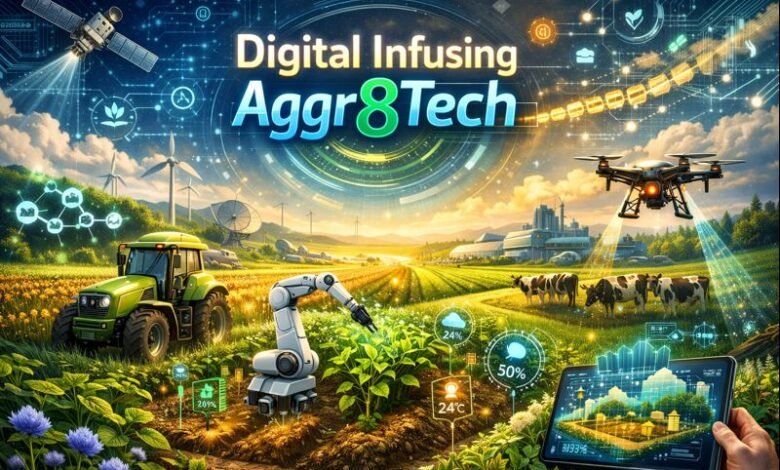
In today’s world, agriculture is no longer just about planting crops and tending to animals. It’s now a tech-driven industry, where innovations like AI, robotics, and IoT (Internet of Things) are transforming how food is grown, harvested, and distributed. One term that’s becoming increasingly important in this transformation is digital infusing aggr8tech — a catchy way of describing the digital infusion of AgTech (agricultural technology) into farming systems. Digital Infusing Aggr8Tech is a concept that blends advanced digital technologies with agricultural practices. This process involves the integration of smart technologies into traditional farming methods, making them more efficient, sustainable, and capable of meeting the demands of the modern world. By combining the power of technology with farming, digital infusing aggr8tech helps farmers manage their operations with precision, saving time and resources, while increasing productivity and reducing environmental impact.
As the world faces challenges like climate change, a growing population, and the need for sustainable food production, AgTech has emerged as a solution. The digital infusion of technologies in agriculture, or digital agri-tech, allows farmers to make better decisions based on data, improve crop yield, and enhance their business outcomes. This article will take you on a deep dive into the meaning of digital infusing aggr8tech, exploring its role in agriculture, the technologies involved, and its potential to change the farming landscape. Whether you’re new to the subject or familiar with it, this guide will provide valuable insights into how technology is reshaping the agricultural industry.
Understanding the Basics: What Does Digital Infusing Aggr8Tech Mean?
To understand the full impact of digital infusing aggr8tech, we first need to break down the core components of the term. Digital infusing refers to the process of integrating modern digital technologies into traditional sectors. In this case, it’s about using digital tools and innovations in agriculture. Aggr8tech is a stylized term for AgTech, which stands for agricultural technology.
AgTech refers to the use of technology to improve the efficiency, productivity, and sustainability of agricultural practices. This includes a wide range of technologies such as robotics, sensors, artificial intelligence, data analytics, and more. By infusing digital tools into farming practices, AgTech aims to tackle some of the most pressing challenges in the industry, such as resource management, crop yield, and environmental impact.
The main goal of digital infusing aggr8tech is to optimize farming practices, make them more sustainable, and ultimately increase food production in a way that meets the needs of a growing global population. By incorporating digital technologies into farming, farmers can now make more informed decisions, automate repetitive tasks, and improve their overall productivity.
How Digital Technologies Are Infusing the Future of Agriculture
The infusion of digital technologies into agriculture is not just a passing trend; it is revolutionizing the way farms operate. From automated machinery to real-time data analytics, digital technologies are making agriculture more efficient and sustainable. Let’s take a closer look at how these technologies are being used in modern farming.
Artificial Intelligence in AgTech
Artificial Intelligence (AI) plays a significant role in digital agri-tech. AI helps farmers predict crop yields, assess the health of plants, and even detect potential diseases or pests. Using AI-powered algorithms, farmers can analyze vast amounts of data from sensors, satellite imagery, and drones to make data-driven decisions that improve crop health and increase yield. AI also helps farmers optimize irrigation schedules, reducing water waste and conserving resources.
AI-driven tools are particularly useful in precision farming, where farmers use technology to optimize field-level management regarding crop production and farming practices. Precision farming techniques allow for the efficient use of resources like water, fertilizers, and pesticides, resulting in cost savings and environmental benefits.
The Role of IoT & Connectivity in Smart Farming
The Internet of Things (IoT) has had a transformative effect on agriculture. IoT refers to a network of connected devices that collect and exchange data. In the context of agriculture, IoT devices are used to monitor soil moisture, track weather conditions, and even track the movement of livestock.
IoT-enabled sensors are placed in the soil or on plants to monitor environmental factors such as temperature, humidity, and moisture levels. This real-time data is then sent to a central system, where farmers can access it remotely through mobile devices or computers. By using this data, farmers can adjust irrigation schedules, optimize fertilizer use, and ensure that their crops are growing in the ideal conditions. The connectivity provided by IoT also allows farmers to monitor their operations remotely. Whether they are on-site or away from the farm, farmers can access important data and make timely decisions to improve their operations.
Robotics & Automation: From Robots to Autonomous Machines
Another area where digital technologies are having a huge impact is in robotics and automation. Robots are now being used to carry out a range of tasks on farms, from planting seeds to harvesting crops. These machines can work tirelessly, improving efficiency and reducing the need for manual labor.
For example, autonomous tractors and harvesters can operate without human intervention, reducing labor costs and ensuring that tasks are completed more quickly. Drones are also being used to monitor crop health, deliver pesticides, and even plant seeds. Automation not only saves time but also ensures that tasks are performed with greater precision. This helps farmers achieve higher productivity and consistency in their operations.
Why Digital Infusing Aggr8Tech Is Important for Today’s Food Systems
As the global population continues to grow, the demand for food is expected to increase significantly. However, traditional farming practices are often inefficient and unsustainable. Digital infusing aggr8tech offers a way to address these challenges by improving the efficiency of farming operations, reducing waste, and making food production more sustainable.
Sustainability & Climate Challenges
One of the most pressing issues facing agriculture today is climate change. Changing weather patterns, droughts, and extreme temperatures are making it more difficult for farmers to grow crops. Digital technologies can help farmers adapt to these challenges by providing real-time data on weather conditions and soil health, enabling them to make more informed decisions.
For example, smart irrigation systems can adjust the amount of water used based on real-time weather data, reducing water waste. Additionally, AI-powered tools can help farmers predict weather patterns, allowing them to plan their operations accordingly.
Feeding a Growing World
With the global population expected to reach 9.7 billion by 2050, food production must increase significantly to meet demand. Digital agri-tech is helping farmers grow more food using fewer resources. Precision farming techniques enable farmers to maximize crop yields while minimizing the use of water, fertilizers, and pesticides. This results in more efficient food production and helps ensure that there is enough food to feed the world’s growing population.
Trending Technologies Driving Digital Infusing Aggr8Tech in 2026
The future of digital infusing aggr8tech is filled with exciting developments. Several cutting-edge technologies are expected to shape the agricultural landscape in the coming years.
AI-Powered Predictive Analytics
Predictive analytics powered by AI will continue to evolve, enabling farmers to make more accurate forecasts about crop yields, pest outbreaks, and weather patterns. These tools will provide farmers with valuable insights that help them plan their operations more effectively, reducing risks and maximizing productivity.
Drones and Satellite Imagery
Drones and satellite imagery are already being used to monitor crops and assess field conditions. In the future, these technologies will become even more advanced, providing farmers with high-resolution images and real-time data on crop health. This will allow farmers to make faster decisions and respond to problems more quickly.
Blockchain for Food Traceability
Blockchain technology is expected to play a significant role in the agricultural industry by improving food traceability. By using blockchain, farmers can track the journey of food from farm to table, ensuring transparency and accountability in the food supply chain. This will help reduce fraud, improve food safety, and increase consumer trust.
Challenges & Barriers to Widespread Adoption
While digital infusing aggr8tech offers numerous benefits, there are still several challenges that need to be addressed before these technologies can be widely adopted.
Cost & Access to Digital Tools
One of the biggest barriers to the adoption of digital technologies in agriculture is cost. Many of the technologies used in AgTech, such as AI-powered tools and IoT sensors, can be expensive. Smaller farms may struggle to afford these tools, which can limit their ability to compete in the digital agriculture landscape.
Connectivity Constraints
In rural areas, poor internet connectivity can make it difficult for farmers to use digital tools effectively. Many AgTech solutions rely on real-time data collection and cloud computing, which require a stable internet connection. Without reliable access to the internet, farmers may not be able to take full advantage of these technologies.
Skills & Knowledge Gaps
Adopting digital technologies also requires a certain level of technical expertise. Many farmers may not have the necessary skills or knowledge to use these tools effectively. There is a need for training and education to ensure that farmers can fully understand and utilize digital tools in their operations.
Case Studies: Real Examples of Digital Infusing Aggr8Tech in Action
Several farms around the world are already using digital technologies to improve their operations. These case studies highlight the real-world impact of digital infusing aggr8tech.
Case Study 1: Precision Farming at XYZ Farm
XYZ Farm, located in California, has successfully implemented precision farming techniques using AI-powered tools and IoT sensors. By using data analytics, the farm has been able to optimize irrigation schedules, reduce pesticide use, and increase crop yields by 20%.
Case Study 2: Robotics in Crop Harvesting
At ABC Farms in the UK, autonomous harvesting robots are being used to pick strawberries. These robots can work around the clock, picking fruit with precision and speed. This has allowed the farm to increase its productivity and reduce labor costs.
The Future of Digital Infusing Aggr8Tech: What’s Next?
As we look to the future, digital infusing aggr8tech will continue to play a critical role in transforming agriculture. Technologies like AI, IoT, and robotics will become more advanced, enabling farmers to improve their operations even further. The future of agriculture is digital, and the opportunities for growth and innovation are endless.
Conclusion
Digital infusing aggr8tech is revolutionizing agriculture by integrating digital technologies into farming practices. By using tools like AI, IoT, and robotics, farmers can improve efficiency, reduce waste, and produce more food using fewer resources. As the world faces challenges like climate change and a growing population, digital agri-tech offers a solution to feed the world sustainably. Understanding these technologies and their potential is crucial for anyone interested in the future of farming.
Also Read: Pearlyn Goh Kun Shan