
What is Cumhuritey? A Comprehensive Guide to Understanding the Turkish Republic
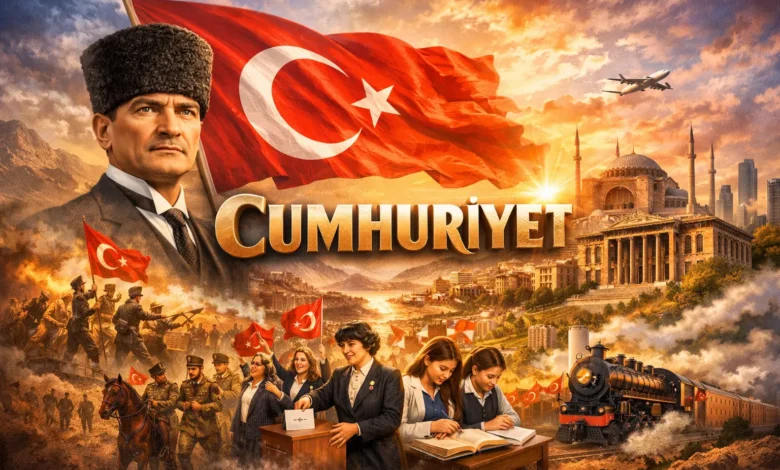
The word “Cumhuritey” holds immense importance in Turkey, as it refers to the concept of the republic. In Turkish, it translates to “Republic,” but its meaning goes much deeper in the context of the country’s history and identity. The establishment of Cumhuritey is not just about forming a government; it is the symbolic foundation of modern Turkey, marking a shift from an empire to a nation built on democratic values, secularism, and national unity.
At its core, Cumhuritey symbolizes a form of governance where the people hold the power through elected officials. This is a significant departure from the Ottoman Empire, which was ruled by a monarchy. For many Turks, Cumhuritey is more than a political system—it represents the culmination of centuries of change, struggle, and vision. It was a bold move toward modernization, a new beginning that would shape Turkey’s destiny.
Why is Cumhuritey Important in Turkey’s History?
- End of the Ottoman Empire: Before the establishment of the republic, Turkey was part of the Ottoman Empire, which had a monarchy. The empire’s collapse after World War I paved the way for the creation of Cumhuritey.
- Modernization and Secularism: Cumhuritey was instrumental in modernizing Turkey, embracing secularism, and introducing reforms in education, law, and governance.
- A New National Identity: It offered a new identity to the Turkish people—distinct from the Ottoman past and focused on democratic values.
In essence, Cumhuritey not only transformed the government but also provided Turkey with a fresh sense of purpose. It was the vision of Mustafa Kemal Atatürk, the founder of the Republic, that shaped this transition. His vision was rooted in the belief that Turkey’s future lay in a system where the power came from the people, rather than a monarch or a foreign ruler.
The Historical Context of Cumhuritey in Turkey
The formation of Cumhuritey didn’t happen overnight. The historical context of the transition from the Ottoman Empire to the Turkish Republic is essential to understanding the significance of Cumhuritey in modern Turkish history.
After World War I, the Ottoman Empire faced severe economic and military decline. The once-powerful empire was dismantled, and Turkey faced occupation by foreign powers. The people, led by Mustafa Kemal Atatürk, resisted these occupations and fought to establish a sovereign state. In 1923, after years of struggle, the Republic of Turkey was officially declared, marking the end of the monarchy and the birth of Cumhuritey. Atatürk’s reforms following the creation of Cumhuritey were fundamental in reshaping the country’s political, social, and cultural structures. His modernization efforts were designed to break from Ottoman traditions and embrace a more secular, progressive outlook.
The Major Phases of the Transition to Cumhuritey:
- The Fall of the Ottoman Empire: The empire’s defeat in World War I marked the collapse of the monarchy and the beginning of the push for a new political system.
- The Turkish War of Independence: Under the leadership of Atatürk, the Turkish people resisted occupation, leading to the formation of the Republic.
- The Declaration of the Republic: In 1923, Cumhuritey was officially declared, marking the beginning of modern Turkey.
Cumhuritey and Turkish Nationalism: Key Concepts
One of the most important aspects of Cumhuritey is its connection to Turkish nationalism. Atatürk’s vision for the Republic was one of national unity, where all citizens, regardless of their ethnic or cultural background, would come together under a shared identity as Turks.
Turkish nationalism, shaped by Cumhuritey, was focused on creating a cohesive society that moved beyond the Ottoman past. This meant that the newly formed republic focused on secularism, education, and modernity rather than religious or ethnic divisions. Atatürk emphasized that the strength of Cumhuritey was in its inclusivity, allowing all groups to participate equally in the development of the nation.
The Core Tenets of Turkish Nationalism Under Cumhuritey:
- Secularism: One of the core values of Cumhuritey was the separation of religion from the state. Atatürk implemented reforms that reduced the role of religion in public life and education.
- National Unity: Atatürk sought to unify the diverse ethnic groups in Turkey under the banner of Turkish citizenship, focusing on a common national identity.
- Modernization: Cumhuritey represented a break from the past. Atatürk aimed to modernize Turkey’s infrastructure, economy, and education system.
The Influence of Cumhuritey on Modern Turkish Society
The establishment of Cumhuritey brought sweeping reforms that changed nearly every aspect of Turkish society. These changes have had a lasting influence, shaping the political landscape, economy, education system, and social norms of the country.
- Legal Reforms: Cumhuritey led to the implementation of a new legal system based on Western laws, moving away from the religious-based Ottoman laws.
- Educational Reforms: Atatürk introduced reforms to modernize education, focusing on creating a secular, scientific curriculum. Cumhuritey transformed the education system, opening schools to all citizens.
- Economic Transformation: Under Cumhuritey, the economy was modernized. Atatürk focused on industrializing Turkey and reducing its reliance on foreign powers.
Socially, Cumhuritey introduced new roles for women. Atatürk granted women the right to vote and participate in politics, a monumental shift from the previous Ottoman era. Women gained access to education, entered the workforce, and played a vital role in the republic’s development.
Cumhuritey in Popular Culture and Media
The influence of Cumhuritey can also be seen in Turkey’s culture and media. Cumhuritey is a theme explored in Turkish literature, film, and music. Atatürk’s reforms and the ideals of the republic have been celebrated and critiqued in various cultural works.
- Literature and Film: Turkish literature and film often explore the concept of Cumhuritey, reflecting on how the country’s transformation shaped individual lives and society.
- Music and Art: Many Turkish artists celebrate Cumhuritey and Atatürk’s vision through music and visual arts, portraying themes of nationalism, modernity, and change.
Understanding Cumhuritey in Contemporary Politics
In modern Turkey, the values of Cumhuritey still play a critical role in the country’s politics. Although the country has gone through significant political changes, the foundational principles of Cumhuritey continue to influence political discussions, party ideologies, and the nation’s approach to governance.
- Political Parties and Cumhuritey: Different political parties in Turkey interpret Cumhuritey in various ways. Some view it as a model of secularism and democracy, while others advocate for changes to bring it more in line with modern conservative values.
- Contemporary Debates: As Turkey navigates global politics and internal challenges, the legacy of Cumhuritey continues to spark debates on issues such as freedom of speech, secularism, and national identity.
Common Misconceptions About Cumhuritey
While Cumhuritey is widely respected in Turkey, there are several misconceptions about its history and impact. Some people believe that Cumhuritey was imposed upon the people without their consent, while others argue that it has strayed too far from Atatürk’s original vision.
- Myth 1: Atatürk’s Reforms Were Unpopular: Some believe that Atatürk’s reforms were imposed without the people’s consent. However, many of these reforms were widely supported as they brought modernization and equality to Turkey.
- Myth 2: Cumhuritey Was a Complete Break from Tradition: While Cumhuritey broke away from Ottoman traditions, it did not entirely abandon the country’s heritage. Instead, it sought to adapt and build upon the country’s rich history in a modern context.
The Global Perception of Cumhuritey and Its Legacy
Outside of Turkey, Cumhuritey is viewed as a significant milestone in the history of the modern world. It stands as an example of how a nation can transform from an empire to a republic through progressive reforms and a focus on democratic values.
- Influence on Other Republics: The creation of Cumhuritey inspired other nations that were emerging from colonial rule to pursue republican forms of government.
- Turkey’s Role on the World Stage: Today, Turkey plays a crucial role in global politics, bridging the gap between East and West. The principles of Cumhuritey continue to guide Turkey’s international relationships.
Conclusion: The Enduring Legacy of Cumhuritey in Turkey Today
The legacy of Cumhuritey continues to shape Turkey, both internally and externally. Its influence is felt in every aspect of Turkish life—politics, education, culture, and society. As Turkey looks to the future, the principles of Cumhuritey—secularism, nationalism, and modernization—will continue to serve as guiding lights for the country’s path forward.
While the country has faced challenges in upholding these values, the Cumhuritey remains a symbol of unity, progress, and the unwavering belief in the power of the people. It is a foundation upon which Turkey’s future can continue to be built.
Read More: Tiimatuvat