How Ema’s Enterprise AI Agents Integrate With Your Tech Stack
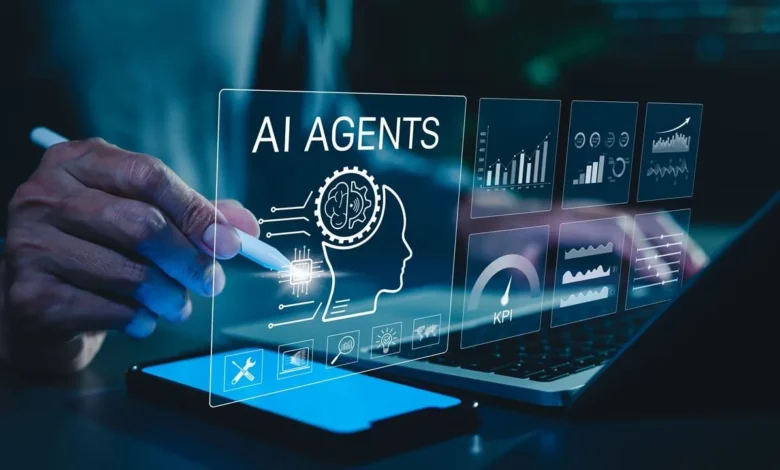
Enterprise technology stacks are not simple. Most large organizations run dozens of platforms simultaneously: CRM systems, ERP software, HRIS platforms, ITSM tools, data warehouses, communication platforms, and industry-specific applications, all connected through a web of APIs, middleware, and custom integrations built up over years. Dropping an AI agent into that environment without a clear integration strategy is one of the fastest ways to create new operational problems rather than solve existing ones. According to Gartner, 40% of enterprise applications will be integrated with task-specific AI agents by the end of 2026, up from less than 5% in 2025. That shift is happening fast, and how enterprises approach integration determines whether they capture real value or add technical debt.
Ema’s enterprise AI agents are built with tech stack integration as a foundational design principle, not an afterthought. This blog explains how that integration works in practice, across the systems enterprises already depend on, and what it takes to connect AI agents to production environments that are complex, regulated, and unforgiving of implementation shortcuts.
Why Tech Stack Integration Is the Make-or-Break Factor for AI Agents
An AI agent that cannot connect to the systems where work happens cannot complete real workflows. It can only automate fragments. This is one of the most common reasons enterprise AI agent deployments fall short: the technology works in isolation but cannot access the data and platforms needed to deliver end-to-end value.
The issue is not always purely technical. In some cases, enterprises have not fully mapped the systems involved in a workflow before deployment. In others, legacy platforms lack modern API access, or security and compliance requirements restrict how data can move across systems.
Understanding these integration constraints early is what separates fast, effective deployments from long post-launch troubleshooting cycles.
Common integration barriers include:
- Legacy system constraints: Older platforms often lack the API connectivity modern AI agents need, making custom connectors or middleware necessary.
- Data silos: When workflow data is spread across disconnected systems, the agent cannot get a complete view of the process.
- Security perimeters: Enterprise security controls can limit data access, so integration design must work within those boundaries.
- Inconsistent data formats: Similar data stored in different formats across systems requires transformation before the agent can use it reliably.
- Approval workflows: Complex approval structures can affect how agent actions are authorised, routed, and logged across connected systems.
Recognising these barriers before deployment is the first step to building an AI agent integration that actually works.
How Ema Connects to CRM and Sales Platforms
Sales workflows depend on CRM data such as lead records, account history, opportunity stages, contact activity, and pipeline status. If an AI agent cannot read from and write to the CRM, it cannot support sales in a meaningful way.
Ema connects directly with major CRM platforms like Salesforce and HubSpot, allowing AI agents to work inside sales workflows instead of outside them.
This enables agents to:
- Prepare meeting briefs using live account and contact data without manual research.
- Update CRM records by logging activities, changing opportunity stages, and capturing next steps automatically.
- Qualify inbound leads against ICP criteria using live CRM data and trigger the right follow-up actions.
- Generate pipeline reports from current CRM data without manual extraction or formatting.
- Flag stalled deals by tracking activity patterns in the CRM.
The integration is bidirectional. Ema reads CRM data to make decisions and writes outcomes back to keep records updated, reducing manual CRM work for sales teams.
How Ema Integrates With HRIS and Employee Systems
HR workflows span multiple systems. Even a single onboarding process may involve the HRIS, payroll, identity management, document systems, LMS platforms, and tools like Slack or Microsoft Teams. For an AI agent to manage that workflow, it needs access across that system stack.
Ema integrates with major HRIS platforms such as Workday, BambooHR, and SAP SuccessFactors, along with the connected systems HR teams rely on.
This allows agents to support end-to-end HR workflows such as:
- Onboarding across HRIS, IAM, document systems, LMS platforms, and communication tools.
- Policy and benefits Q&A through HR systems, benefits platforms, and internal knowledge bases.
- Performance cycles using HRIS, survey tools, and communication platforms.
- Offboarding across HRIS, IAM, IT asset tools, and payroll systems.
- Benefits administration through HRIS, payroll, and benefits portals.
The result is an AI agent that can manage complete HR workflows across systems, rather than handling one step at a time while humans coordinate the rest.
How Ema Works With ITSM and IT Operations Platforms
IT service management is one of the highest-volume, most process-driven functions in large enterprises. Ticket routing, access provisioning, software requests, incident management, and compliance monitoring all run through ITSM platforms that sit at the center of a complex system environment.
According to McKinsey’s State of AI 2025, 88% of organizations report regular AI use in at least one business function, yet only 23% are actively scaling agentic AI systems anywhere in their enterprise. IT operations is consistently identified as one of the functions where the gap between AI experimentation and production-level agentic deployment is widest, because integration complexity has historically made full workflow automation difficult.
This enables agents to:
- Read and classify tickets while pulling the right resolution steps from the knowledge base.
- Execute provisioning tasks in connected identity and access systems without manual IT action.
- Update and close tickets in the ITSM platform after resolution.
- Escalate complex cases with full diagnostic context already documented.
- Monitor system alerts and trigger incident workflows when thresholds are met.
This reduces time spent on tier-one support and frees IT teams to focus on higher-value technical work.
How Ema Integrates With Finance and ERP Systems
Finance workflows require precision, traceability, and compliance. Without deep system integration, an AI agent cannot manage them reliably.
Ema connects with ERP platforms such as SAP, Oracle, and NetSuite, enabling end-to-end finance workflow automation.
Key use cases include:
- Invoice processing: Extracting invoice data, matching it to purchase orders, flagging discrepancies, and routing approvals automatically.
- Expense management: Validating claims against policy, approving compliant submissions, and routing exceptions with the reason documented.
- Vendor onboarding: Collecting documents, checking compliance requirements, and completing onboarding records in the ERP.
- Audit preparation: Pulling transaction records and approval history to generate audit-ready reports without manual aggregation.
The result is faster processing, better compliance consistency, and lower error-related costs.
How Ema Connects to Communication and Collaboration Platforms
A large share of enterprise work happens in Slack, Microsoft Teams, email, and meeting tools. If an AI agent cannot work in those environments, it misses a critical part of the workflow.
Ema integrates with Slack, Microsoft Teams, and email platforms so employees can interact with agents directly where they already work.
This allows agents to:
- Respond in existing channels without requiring users to switch tools.
- Surface alerts and updates in the team’s active communication environment.
- Turn natural language instructions into structured workflow actions in connected systems.
- Manage human handoffs by passing context directly through existing channels.
This makes AI agents easier to adopt because they fit into existing work patterns instead of forcing teams into a separate tool.
Security and Compliance in Ema’s Integration Architecture
Deep system integration creates data access that requires equally deep security controls. Enterprises in regulated industries cannot accept an integration architecture that creates compliance risk in exchange for workflow efficiency. Ema’s integration design addresses this directly.
Key security and compliance features of Ema’s integration architecture include the following:
- On-premise and private cloud deployment: Ema can run within the customer’s own environment, so enterprise data stays inside the organisation’s security perimeter.
- Role-based access controls: Each agent’s access is limited by role, aligned with the enterprise’s existing permission model. An HR agent, for example, cannot access finance data.
- Compliance coverage: Ema supports major enterprise compliance requirements including SOC 2, HIPAA, GDPR, and ISO standards.
- Complete audit logging: Every agent action across connected systems is logged for compliance review, investigations, and performance monitoring.
- Data handling transparency: Customer data is not used to train or improve models and remains under the customer’s governance controls.
These controls are built into the integration architecture, not added later. That matters for enterprises evaluating regulated deployments.
Building Integration Depth Over Time
The most successful enterprise AI agent deployments do not attempt to integrate with every system in the tech stack on day one. They start with the systems most critical to the initial use case, validate that integration in production, and expand connectivity as deployment scope grows.
A practical integration sequencing approach looks like this:
- Phase 1: Integrate the two or three core systems the workflow depends on most. Validate data flow, write-back reliability, and security controls.
- Phase 2: Expand to adjacent systems needed for fuller workflow execution, using lessons from the first phase to reduce integration effort.
- Phase 3: Connect communication and collaboration tools so the agent fits into the team’s daily workflow.
- Phase 4: Extend into cross-functional systems so the agent can support workflows that span multiple business areas.
Each phase delivers value while building the technical base for the next. As integration depth grows, the value of the AI agent grows with it.
Integration Is Where AI Agent Value Is Built
The gap between an AI agent that works in a demo and one that works in a production enterprise environment is almost entirely an integration gap. Technology that cannot connect to the systems where enterprise work happens cannot complete enterprise workflows. And workflows that are only partially automated still require human intervention at the points where automation stops.
That is why integration architecture is not a technical implementation detail. It is the strategic foundation on which AI agent value is built, and maintained, and grown over time.
For enterprises building their AI agent strategy in 2026, the right question is not only which Ema’s enterprise AI agents can do, but which systems in your existing tech stack they can reach, and how deeply they can operate within the workflows those systems support.