
Pentagon Big Tech Tesla Cybertruck: The Future of Defense and Technology Intersect
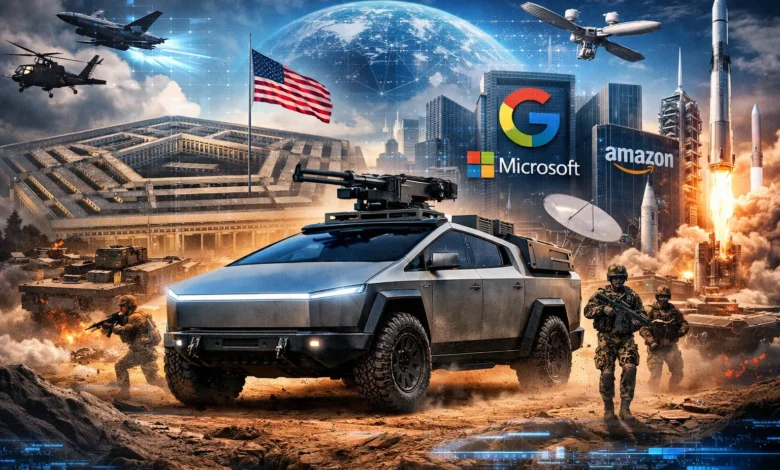
In today’s rapidly advancing world, the Pentagon, Big Tech, and Tesla are converging in ways that could shape the future of both national defense and technological innovation. Once distinct sectors, the Pentagon Big Tech Tesla Cybertruck combination is fast becoming a key focal point for technological evolution, particularly in the military. The Pentagon, responsible for national defense, is increasingly turning to commercial tech firms to modernize its operations, from AI and robotics to autonomous vehicles. One of the most surprising new developments in this fusion is the Cybertruck, Tesla’s bold and futuristic electric vehicle, which has caught the Pentagon’s attention. The Cybertruck is not just a civilian car; it’s a symbol of how civilian technologies may soon play a pivotal role in military operations.
This blog post will delve into how these three massive entities—the Pentagon, Big Tech, and Tesla—are changing the landscape of modern defense. It will explore the Pentagon’s evolving relationship with Big Tech, why the Cybertruck is now on the military radar, and how this collaboration could redefine the future of defense and innovation.
The Pentagon’s Role in Technological Innovation
The Pentagon has always been at the forefront of innovation, but in recent decades, it has increasingly turned to external sources of technological expertise. From developing GPS to deploying stealth bombers, the U.S. Department of Defense has long been a catalyst for breakthroughs in technology. However, as warfare has become more digital and technological, the Pentagon has found it increasingly difficult to maintain technological superiority through traditional defense contractors alone. As the modern battlefield evolves, the Pentagon now relies on Big Tech companies to develop solutions that are often more agile and innovative than what traditional defense contractors can offer. In particular, technologies like cloud computing, artificial intelligence (AI), autonomous systems, and cybersecurity are essential for modern warfare.
This evolving relationship between the Pentagon and Big Tech companies reflects a significant shift in defense procurement strategies. While traditional contractors like Lockheed Martin and Boeing remain central to the defense industry, companies like Microsoft, Google, and Amazon have moved to the forefront by providing cutting-edge tools and infrastructure. These technologies are crucial for data analytics, communications, and logistical operations. But there’s more: the Pentagon’s interest is not limited to the software and digital infrastructure. The Pentagon is increasingly looking at physical products, like Tesla’s Cybertruck, that could play a role in the military’s future operations.
Big Tech’s Growing Influence on National Defense
The influence of Big Tech on the Pentagon is undeniable. Companies like Microsoft, Google, Amazon, and Tesla have become integral parts of modern defense strategies. The Pentagon no longer solely relies on defense contractors for technological development. Instead, it works alongside these tech giants to develop innovative solutions for everything from cloud storage to AI-based weapons systems. For instance, Amazon Web Services (AWS) provides cloud infrastructure for the Pentagon, allowing for secure data storage, processing, and sharing across defense networks. Google’s AI and machine learning technologies are used for military purposes like analyzing intelligence data and making autonomous decisions in real-time.
However, what’s more interesting is how the Pentagon has begun to partner with companies that were traditionally seen as non-military players—Tesla being one of them. In fact, the Cybertruck, Tesla’s rugged electric vehicle, has sparked significant interest within military circles. While its initial purpose was to cater to civilian markets, the Cybertruck‘s capabilities—like its robust design, electric powertrain, and advanced features—make it an attractive option for military use, especially in harsh environments where traditional military vehicles might struggle.
Tesla: Not Just About Cars, But About the Future of Defense
Tesla, traditionally known for electric vehicles (EVs), is evolving beyond its roots. The company’s founder, Elon Musk, has long been known for his ambitious vision of the future, not just in the realm of clean energy and transportation, but also in space exploration and defense technologies. SpaceX, Musk’s other company, is already working with the U.S. military to deliver payloads into space, and it’s not surprising that Tesla could soon be involved in military applications as well. The Cybertruck is one such example of how Tesla is entering new and unexpected arenas. With its angular design and bulletproof stainless steel exterior, the Cybertruck isn’t your average pickup truck. These features, alongside the vehicle’s electric powertrain, make it a potential game-changer for military operations.
Why is the Pentagon so interested in the Cybertruck? The military has long been interested in electric vehicles for several reasons: efficiency, low operating costs, and the potential to reduce dependency on fossil fuels. Additionally, the Cybertruck’s rugged design makes it ideal for difficult terrains, such as deserts and rugged battlefields, where traditional vehicles might falter. Moreover, Tesla’s autonomous driving capabilities and AI systems could be integrated into military applications, allowing for autonomous supply chains, drones, and robotic vehicles. This shift toward electric, autonomous, and AI-powered vehicles represents a paradigm shift in how the Pentagon views military operations and vehicle design.
The Pentagon’s Interest in Tesla’s Cybertruck: Why It Matters
The Pentagon’s interest in Tesla’s Cybertruck has raised eyebrows across both the defense and tech industries. The U.S. military has been eyeing Tesla’s innovative technology and electric vehicles as part of its future strategy to modernize its fleet of military vehicles. The Cybertruck, with its tough exterior and advanced technology, offers a unique set of benefits for military applications. The military is interested in using the Cybertruck in various ways, such as combat vehicle simulation, transporting equipment, and possibly even in specialized military operations. The ruggedness of the Cybertruck would make it ideal for harsh environments, and its electric powertrain would allow it to operate in situations where traditional fuel-powered vehicles might be at a disadvantage.
In 2021, the Air Force even tested the Cybertruck for use in simulated military environments, trying it out as a platform to simulate battlefield threats. The Pentagon’s interest in Tesla’s vehicle may be just the beginning of a broader trend where commercial electric vehicles are adapted for military use. This connection between the Pentagon and Tesla is not just about military vehicles. It’s part of a larger strategy to integrate cutting-edge civilian technologies into military operations, which could have long-lasting implications for the future of warfare.
The Bigger Picture: A Look at the Fusion of Tech and Military Innovation
The collaboration between Pentagon Big Tech Tesla Cybertruck is indicative of a much larger trend in the military’s approach to modernizing and adapting to new technologies. The fusion of civilian tech with military innovation is not limited to just vehicles. Technologies like artificial intelligence (AI), drones, cybersecurity, machine learning, and cloud computing are also being integrated into military operations.
The Pentagon’s embrace of Big Tech has led to greater innovation in military strategies, from improving cyber defense to developing autonomous weapons systems. Tesla’s role in this new landscape, especially with the Cybertruck, signifies a growing trend of civilians working with the military to help solve the complex challenges faced on the battlefield. This collaboration between the military and tech companies is likely to increase in the coming years. As technology continues to evolve, the Pentagon will undoubtedly look to the private sector for new solutions to modern warfare challenges.
Challenges and Concerns of the Pentagon–Big Tech Relationship
While the increasing integration of Big Tech into the Pentagon’s operations is undoubtedly promising, it also raises several concerns. One of the main challenges is the ethical implications of using civilian technology for military purposes. The public often questions whether tech companies should be working alongside the Pentagon, particularly when it comes to the use of artificial intelligence (AI) in military decision-making and weaponry.
Additionally, the security risks involved in using commercial tech for national defense are a significant concern. Cybersecurity threats, data breaches, and the potential for foreign adversaries to exploit weaknesses in military technology are ongoing challenges that the Pentagon and its partners must navigate carefully.
Conclusion: What’s Next for the Pentagon, Big Tech, Tesla, and the Cybertruck
The relationship between the Pentagon, Big Tech, and Tesla—embodied most recently by the Cybertruck—is setting the stage for a new era in defense and technology. As the Pentagon continues to modernize its operations, the integration of cutting-edge civilian technologies will play a critical role in shaping the future of warfare.
The Cybertruck is just the beginning. As Tesla, Big Tech, and the military continue to collaborate, we can expect to see even more innovative technologies emerge, revolutionizing not just the way we fight wars, but the way we think about technology’s role in society. The future of defense tech is undoubtedly intertwined with the world of commercial innovation. As the Pentagon Big Tech Tesla Cybertruck collaboration unfolds, it will undoubtedly shape the way military operations are conducted for generations to come.
Read More: Turbo Geek.org